Should You Be Your Own General Contractor
The biggest mistake people make when building a home is underestimating what a general contractor actually does. Acting as your own GC can look like a simple way to save money, but it quietly replaces one role with dozens of responsibilities—each one critical to keeping a project on schedule and on budget. Before deciding if it’s worth it, it’s important to understand what you’re actually taking on.
Acting as your own general contractor (often called an owner-builder) means you take full responsibility for managing a construction project instead of hiring a licensed general contractor to oversee it. On paper, it can look like an opportunity to save 10–25% in contractor fees while gaining more control over subcontractors, materials, and scheduling. In reality, it also means you become the central coordinator for every phase of the build, absorbing the responsibility for timing, communication, budgeting, and jobsite decisions. Whether it’s worth it depends less on potential savings and more on your experience, availability, and ability to manage a complex construction process without a buffer.
Hiring a licensed general contractor means you are paying a professional to manage the entire construction process on your behalf, including subcontractor coordination, scheduling, budgeting, and jobsite oversight. The GC acts as the central point of responsibility and typically brings established relationships with trades, predictable workflows, and experience managing delays and inspections. In contrast, acting as your own GC removes that layer of management and shifts every responsibility directly to you, including hiring decisions, scheduling conflicts, cost control, and on-site problem solving. While hiring a GC adds cost, it reduces risk, time commitment, and day-to-day involvement in the project.
An owner-builder is responsible for coordinating the day-to-day flow of a construction project from start to finish.
This includes:
Unlike a general contractor who manages multiple projects and delegates oversight, the owner-builder is directly involved in every stage and carries full responsibility for keeping the project moving.
You are responsible for hiring trades in the correct order and keeping their work aligned with the overall construction timeline. Delays or miscommunication at this stage can affect every subsequent phase of the project.
You handle all permitting requirements and coordinate inspections with local building authorities. This ensures each phase of construction is approved before the next stage begins.
You oversee the project budget, approve payments, and track costs across all materials and subcontractor labor. This includes managing change orders and preventing scope creep.
You are ultimately responsible for maintaining a safe jobsite and ensuring compliance with safety standards. In many cases, liability for accidents or issues on-site falls on the owner-builder rather than a general contractor.
Every construction project is different, and there’s no one-size-fits-all answer. The right choice depends on your experience, availability, comfort with risk, and the complexity of your build.
There are situations where acting as your own general contractor can be a practical and rewarding decision. If you have the right combination of experience, time, and organizational skills, managing your own project may provide greater control while reducing overall construction costs.
If you’ve worked in construction, managed renovation projects, or have experience coordinating multiple trades, you’ll already understand many of the challenges involved. Knowing how construction phases fit together, recognizing quality workmanship, and anticipating potential issues can help you make informed decisions and avoid costly delays.
Successful owner-builders are often available during normal business hours to meet subcontractors, inspect progress, answer questions, and address unexpected issues. If your schedule allows you to spend consistent time on-site, you’ll be better positioned to keep the project moving and respond quickly when plans change.
Managing your own project may be more realistic for smaller additions, detached garages, workshops, or projects completed in phases. These builds generally involve fewer subcontractors and less scheduling complexity than constructing a custom home from the ground up, making them easier for an owner-builder to coordinate.
While many homeowners are attracted by the potential cost savings, acting as your own GC isn’t the right fit for every project or every person. If you’re unprepared for the demands of construction management, the risks can quickly outweigh the benefits.
Building a home involves hundreds of decisions and careful coordination between multiple trades. Without prior construction experience, it’s easy to underestimate scheduling requirements, overlook quality issues, or encounter delays that increase both costs and stress.
Construction doesn’t stop because your workday is busy. Subcontractors often need decisions made immediately, inspections must be scheduled, and deliveries don’t always happen on your timetable. If you can’t consistently be available during the workweek, keeping the project on schedule can become difficult.
You don’t have to know how to perform every trade yourself, but you do need to understand how the construction process works. Reading plans, evaluating workmanship, coordinating inspections, and recognizing potential problems are all essential responsibilities. Without that knowledge, mistakes may not become apparent until they’re expensive or difficult to correct.
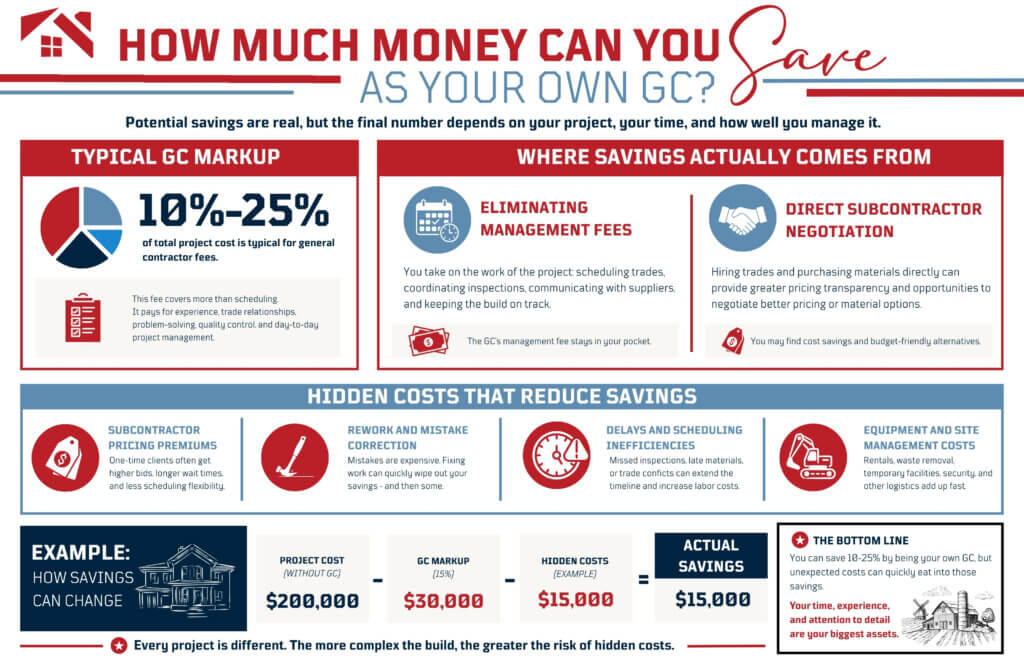
For many homeowners, cost savings are the biggest reason to consider acting as their own general contractor. By taking over project management responsibilities, you eliminate the fee a general contractor charges to coordinate the build. However, those savings aren’t always as straightforward as they appear. Your actual savings depend on the size of the project, your ability to manage subcontractors efficiently, and whether you can avoid costly delays and mistakes.
General contractors typically charge between 10% and 25% of a project’s total cost to manage construction. The exact percentage varies based on project size, complexity, location, and the services provided. While removing that markup can represent thousands—or even tens of thousands—of dollars in potential savings, it’s important to remember that the fee covers far more than scheduling subcontractors. It also pays for experience, established trade relationships, problem-solving, quality control, and day-to-day project management.
The largest savings come from taking over responsibilities that would normally be handled by a general contractor. Rather than paying someone else to coordinate the project, you invest your own time and effort.
Instead of paying a contractor to oversee the build, you assume responsibility for scheduling trades, coordinating inspections, communicating with suppliers, and keeping the project on track. If you can successfully manage these tasks yourself, the contractor’s management fee remains in your pocket.
Owner-builders often purchase materials directly and hire subcontractors without a middleman. This can provide greater pricing transparency and allow you to compare bids from multiple trades. In some cases, negotiating directly with subcontractors may also uncover opportunities to reduce costs or select alternative materials that fit your budget.
The potential savings of acting as your own GC are often offset by expenses many homeowners don’t anticipate. Small mistakes, scheduling issues, and coordination challenges can quickly reduce—or even eliminate—the money saved by not hiring a general contractor.
Established general contractors provide subcontractors with consistent work throughout the year, which often leads to preferred pricing and scheduling. As a one-time client, you may receive higher bids, longer wait times, or less scheduling flexibility than an experienced builder.
Construction mistakes can be expensive to fix. If work has to be redone because of incorrect sequencing, missed details, or installation errors, the cost of repairs may quickly exceed the savings from managing the project yourself.
Construction depends on careful coordination between multiple trades. A missed inspection, delayed material delivery, or subcontractor scheduling conflict can create a ripple effect that extends the timeline and increases labor costs.
General contractors often have access to equipment, supplier relationships, and established processes that help keep projects running efficiently. As an owner-builder, you may need to arrange equipment rentals, temporary facilities, waste removal, security, or other site logistics that add unexpected costs to the project.
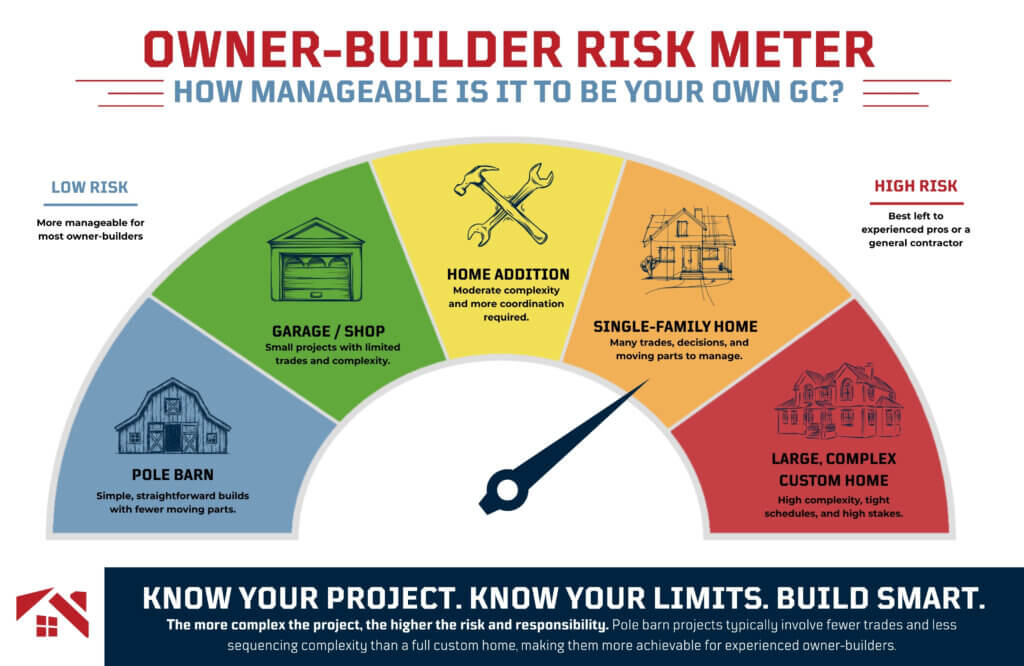
Managing a construction project is about much more than hiring subcontractors and tracking expenses. Every stage of the build depends on dozens of moving parts working together at the right time. While experienced general contractors have established systems for keeping projects on schedule, owner-builders often learn these challenges through trial and error. Understanding the realities ahead of time can help you decide whether the responsibility is worth taking on.
Many homeowners assume acting as their own GC simply means checking in on the project every few days. In reality, successful owner-builders spend significant time planning, communicating with subcontractors, solving unexpected issues, and keeping work moving from one phase to the next.
Construction rarely follows a perfect schedule. Material deliveries change, inspections get rescheduled, weather causes delays, and subcontractors need answers before they can continue working. Even if you’re not physically performing the labor, managing these moving pieces often requires daily attention during normal business hours.
Every subcontractor depends on the work completed before them. If one trade falls behind schedule, everyone else is affected. Keeping multiple contractors aligned is one of the most challenging—and most important—responsibilities of an owner-builder.
Professional general contractors provide subcontractors with steady work throughout the year, making them valuable long-term clients. Because of those relationships, contractors often receive priority scheduling and faster responses when problems arise. As a one-time homeowner, you may have less flexibility when trying to book experienced trades.
Construction follows a specific sequence, and small scheduling mistakes can create costly delays. If one contractor finishes late or materials don’t arrive on time, the next trade may move on to another project, forcing you to wait days or even weeks before work resumes.
Staying within budget requires more than collecting estimates. Construction costs can change throughout the project, and even small adjustments may affect multiple trades or materials.
Unexpected site conditions, design changes, upgraded materials, and additional labor can quickly increase project costs. Without careful budgeting and contingency planning, small changes can compound into significant overruns before the project is complete.
One of the most overlooked challenges of acting as your own GC is the constant need to make decisions. Every day presents new questions that can affect the schedule, budget, or quality of the finished project.
Whether it’s resolving conflicts between subcontractors, finding replacement materials, answering inspection questions, or addressing unexpected construction issues, the responsibility ultimately falls on you. While many owner-builders enjoy being involved in the process, others find the continuous decision-making more stressful than anticipated.
Taking on the role of general contractor means accepting more than project management responsibilities—you also assume much of the risk that would normally fall on a licensed GC. While insurance requirements and owner-builder laws vary by state and local jurisdiction, you’ll generally be responsible for ensuring the project is built safely, complies with applicable building codes, and stays on track from permitting through final inspection.
Construction sites can be hazardous, and accidents can happen even on well-managed projects. As an owner-builder, it’s important to understand your responsibilities before work begins. Depending on your state, the contractors you hire, and your insurance coverage, you may be responsible for ensuring adequate liability protection is in place and that everyone working on the project complies with applicable safety requirements. Before construction starts, verify that subcontractors carry the appropriate licenses and insurance and speak with your insurance provider about any additional coverage your project may require.
When you hire a general contractor, they typically serve as the primary point of contact for resolving workmanship concerns and coordinating warranty claims with subcontractors. As an owner-builder, that responsibility shifts to you.
If a subcontractor makes an error, responsibility for correcting the problem depends on the terms of your contract and the circumstances surrounding the issue. While reputable contractors often stand behind their work, disputes over responsibility can arise, particularly when one trade’s work affects another. Without a general contractor managing those relationships, you’ll be responsible for documenting the issue, coordinating repairs, and, if necessary, resolving disagreements between the parties involved.
Building permits and inspections help verify that construction meets local codes and safety requirements, but they don’t replace day-to-day quality control. As the owner-builder, you’re responsible for obtaining required permits, scheduling inspections, addressing any deficiencies identified by inspectors, and ensuring work complies with local building regulations before construction moves to the next phase.
Key Takeaway: While acting as your own GC can reduce construction costs, it also transfers much of the responsibility for safety, quality, compliance, and dispute resolution from a professional contractor to you.
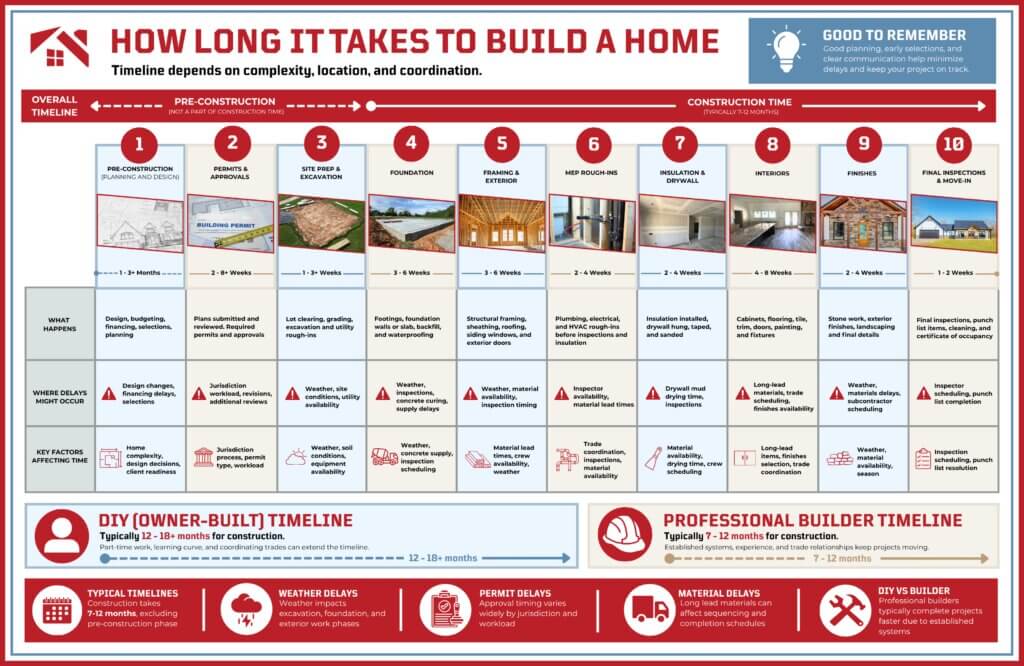
A construction project isn’t just a collection of individual tasks—it’s a sequence of interconnected phases where each step depends on the one before it. General contractors spend years learning how to coordinate these moving parts. As an owner-builder, you’ll be responsible for planning the schedule, keeping subcontractors aligned, and making sure every phase is completed before the next one begins.
Every construction project follows a general order of operations. While the exact sequence varies depending on the project, each phase must be carefully coordinated to avoid delays, rework, and unnecessary costs.
Before construction can begin, the site must be prepared, utilities planned, and the foundation completed according to engineering and local code requirements. Delays during this stage often affect every trade that follows, making it critical to coordinate excavation, concrete work, inspections, and material deliveries.
Once the foundation is complete, framing establishes the building’s structural framework. Roof systems, exterior sheathing, windows, and doors typically follow. During this phase, you’ll coordinate multiple crews while ensuring the structure is ready for mechanical systems and required inspections.
After the building is framed, licensed trades install plumbing, electrical, HVAC, and other building systems. These contractors often work around one another, making communication and scheduling especially important. Poor coordination can lead to conflicts that require work to be removed and reinstalled.
Once inspections are complete, insulation, drywall, flooring, cabinetry, trim, paint, and other finish materials can be installed. Although this stage appears straightforward, scheduling multiple finish trades in the proper order remains essential to avoid delays and damage to completed work.
The biggest challenges for owner-builders often occur during the transition between construction phases rather than during the work itself. Even small disruptions can create a domino effect that impacts the entire project schedule.
If one subcontractor finishes late—or finishes early without warning—the next trade may not be available to start immediately. These gaps can leave the project idle while waiting for crews to return.
Late deliveries, backordered products, or damaged materials can halt construction unexpectedly. Without careful planning, a missing component may prevent multiple trades from completing their work on schedule.
Many phases of construction require inspections before work can continue. If an inspection is delayed or corrections are required, subcontractors may have to reschedule their work, increasing both the project timeline and overall cost.
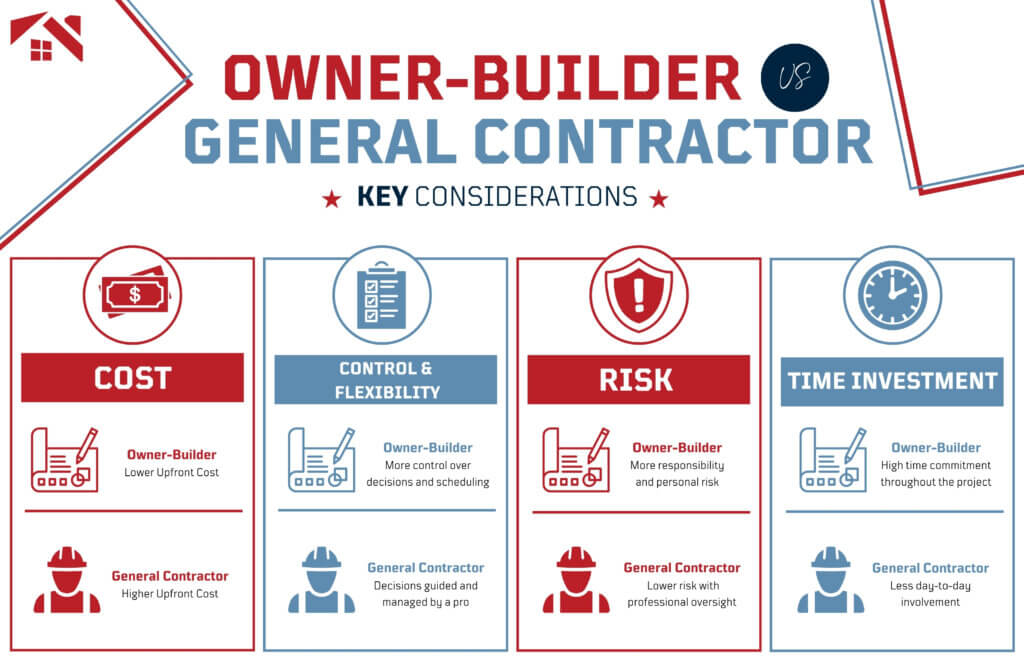
Deciding whether to act as your own general contractor ultimately comes down to balancing cost, control, time, and risk. While managing your own project may reduce construction costs, it also requires significantly more involvement and personal responsibility. The comparison below highlights the key differences between the two approaches.
| Consideration | Owner-Builder | Hiring a General Contractor |
|---|---|---|
| Cost | Lower upfront costs by eliminating the GC's management fee, but savings may be reduced by delays, mistakes, or higher subcontractor pricing. | Higher upfront cost due to contractor fees, but experienced management can help reduce costly errors and keep the project on schedule. |
| Control and Flexibility | Complete control over subcontractor selection, materials, scheduling, and project decisions. | Less day-to-day involvement, but decisions are guided and coordinated by an experienced professional. |
| Risk | Greater responsibility for scheduling, quality control, permits, insurance, and resolving construction issues. | The GC manages coordination, oversees quality, and serves as the primary point of accountability throughout the project. |
| Time Investment | Significantly less day-to-day involvement, allowing homeowners to focus on major decisions rather than daily coordination. | Requires consistent involvement throughout the project, often during normal business hours. |
Neither approach is universally better. Acting as your own GC can be a smart financial decision for experienced owner-builders with flexible schedules and confidence managing construction projects. Hiring a licensed general contractor is often the better choice for homeowners who value predictable timelines, established subcontractor relationships, and professional oversight throughout the building process.

If you’re deciding whether to remodel an existing home or build new, you may come across the “30% rule.” While it’s not a building code or industry standard, it’s a common guideline used by homeowners, contractors, and real estate professionals to evaluate whether a renovation still makes financial sense.
The 30% rule suggests that if the cost of remodeling approaches 30% or more of your home’s current value, it may be worth evaluating whether rebuilding or constructing a new home would provide a better long-term return. Every project is unique, but the idea is simple: as renovation costs increase, you’re investing more money into an existing structure that may still have layout limitations, aging systems, or future maintenance needs.
Rather than relying on a fixed percentage alone, homeowners should also consider the condition of the home, local property values, and their long-term plans.
For homeowners considering a major renovation, the 30% rule can serve as a starting point for comparing the cost of remodeling with the cost of new construction. If a project requires extensive structural changes, system upgrades, or multiple additions, building new may provide greater design flexibility and fewer unforeseen complications.
It’s also worth considering how the project will be managed. Coordinating a large-scale renovation as an owner-builder often involves many of the same responsibilities as managing a new home build, including scheduling trades, obtaining permits, overseeing inspections, and controlling costs.
While there’s no universal threshold, rebuilding or constructing a new home may be the better option when:
If your project falls into one or more of these categories, comparing the total cost, timeline, and complexity of remodeling versus new construction can help you make a more informed decision before deciding whether to manage the project yourself.
It’s also worth considering how the project will be managed. Coordinating a large-scale renovation as an owner-builder often involves many of the same responsibilities as managing a new home build, including scheduling trades, obtaining permits, overseeing inspections, and controlling costs.

This summary reflects recurring themes found in discussions across homeowner communities, including Reddit’s homebuilding forums and owner-builder groups, along with guidance from construction professionals.
While contractor advice is valuable, hearing from homeowners who have actually managed their own construction projects provides another perspective. We reviewed recurring discussions across owner-builder communities, homebuilding forums, and homeowner groups to identify the experiences that appear most consistently. Although every project is different, the themes below surfaced repeatedly regardless of project size or location.
Key Takeaway: Most owner-builders don’t regret taking on the role—but many admit they underestimated the amount of time, coordination, and responsibility involved.
Across homeowner discussions, the same advantages are mentioned time and time again. People who had successful projects generally appreciated the visibility and control they gained throughout the construction process.
Many owner-builders say one of the biggest benefits was knowing exactly where every dollar was spent. Instead of paying a single contract price, they reviewed individual subcontractor bids, compared material costs, and understood how each decision affected the overall budget. That level of transparency often gave homeowners greater confidence in their spending decisions.
Another recurring theme is the ability to work directly with subcontractors. Homeowners appreciated choosing who worked on their project, communicating without an intermediary, and making design or scheduling decisions more quickly when changes arose.
While many homeowners describe the experience as rewarding, the challenges discussed online are remarkably consistent. Most frustrations stem from managing the project itself rather than performing construction work.
The most common surprise is how much coordination happens behind the scenes. Scheduling trades, ordering materials, planning inspections, and resolving conflicts between contractors often required far more time than homeowners expected before construction began.
Many owner-builders found that keeping a project on schedule was more difficult than anticipated. Missed deliveries, subcontractor availability, weather delays, and inspection timing frequently created ripple effects that pushed back multiple phases of construction.
A consistent theme across owner-builder discussions is that the project became a second full-time job. Homeowners often described spending evenings returning phone calls, weekends solving problems, and weekdays making decisions that couldn’t wait until after work.
Despite the challenges, one conclusion appears again and again across homeowner communities.
Many homeowners believe they saved money by acting as their own general contractor, particularly by avoiding contractor management fees. At the same time, they frequently note that unexpected expenses, scheduling delays, and the value of their own time reduced those savings more than they originally anticipated. The overall consensus is that acting as your own GC can be worthwhile—but it’s best suited for people with construction experience, flexible schedules, and the willingness to manage every aspect of the project from start to finish.
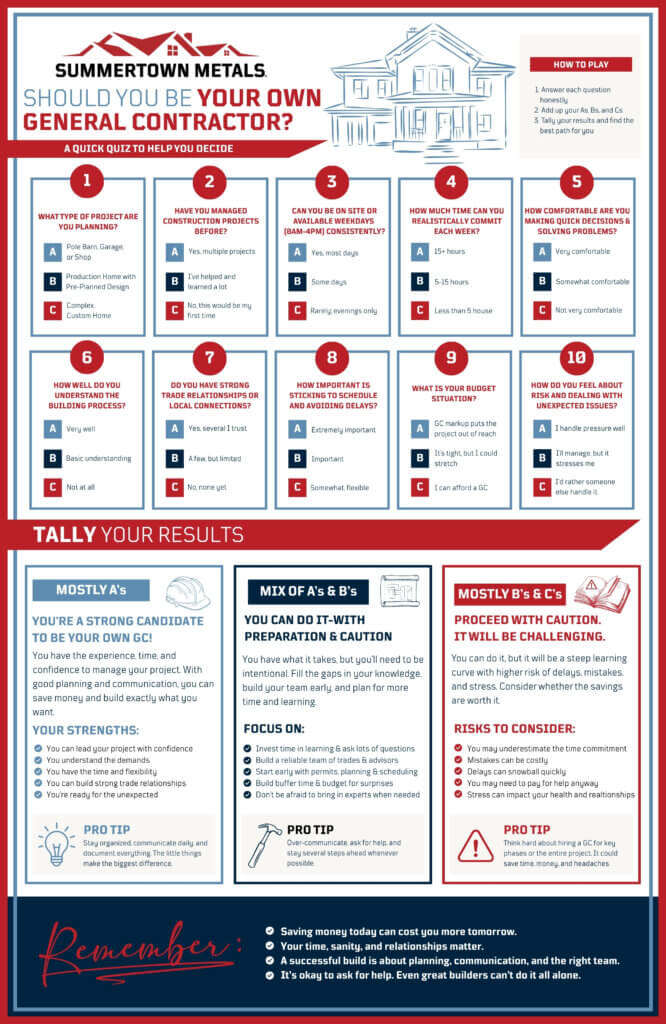
At this point, you understand what the role involves, what it costs, and the risks involved. The decision ultimately comes down to whether your experience, availability, and comfort level align with the demands of managing a full construction project. This framework is meant to help you quickly identify which path is more realistic for your situation.
Acting as your own general contractor can be a good fit when you have the experience, time, and confidence to manage multiple moving parts of a construction project without relying on a dedicated builder.
If you’ve worked in construction, managed subcontractors, or been closely involved in building projects before, you’re more likely to understand sequencing, trade coordination, and jobsite expectations. This experience helps you anticipate issues before they become costly problems.
Successful owner-builders are typically available during normal working hours to meet subcontractors, handle inspections, answer questions, and solve problems as they come up. If your schedule allows for consistent weekday involvement, you’re in a stronger position to keep the project on track.
Knowing how a build flows from foundation to framing to mechanical systems and finishes is critical. When you understand the order of operations, you’re less likely to create scheduling conflicts or approve work that needs to be redone later.
For many homeowners, the demands of coordinating a construction project outweigh the potential cost savings. Hiring a licensed general contractor often leads to a more predictable and less stressful building experience.
If you haven’t managed a construction project before, the learning curve is steep. Even small mistakes in sequencing, scheduling, or communication can create delays and added costs that quickly outweigh the savings of acting as your own GC.
Construction decisions often can’t wait. Subcontractors need answers, inspections need scheduling, and problems need immediate resolution. If you’re unavailable during the day, keeping a project moving smoothly becomes significantly more difficult.
One of the biggest advantages of hiring a general contractor is schedule control. While no construction project is perfectly predictable, experienced GCs are better equipped to manage delays, coordinate trades, and maintain momentum through each phase of the build.
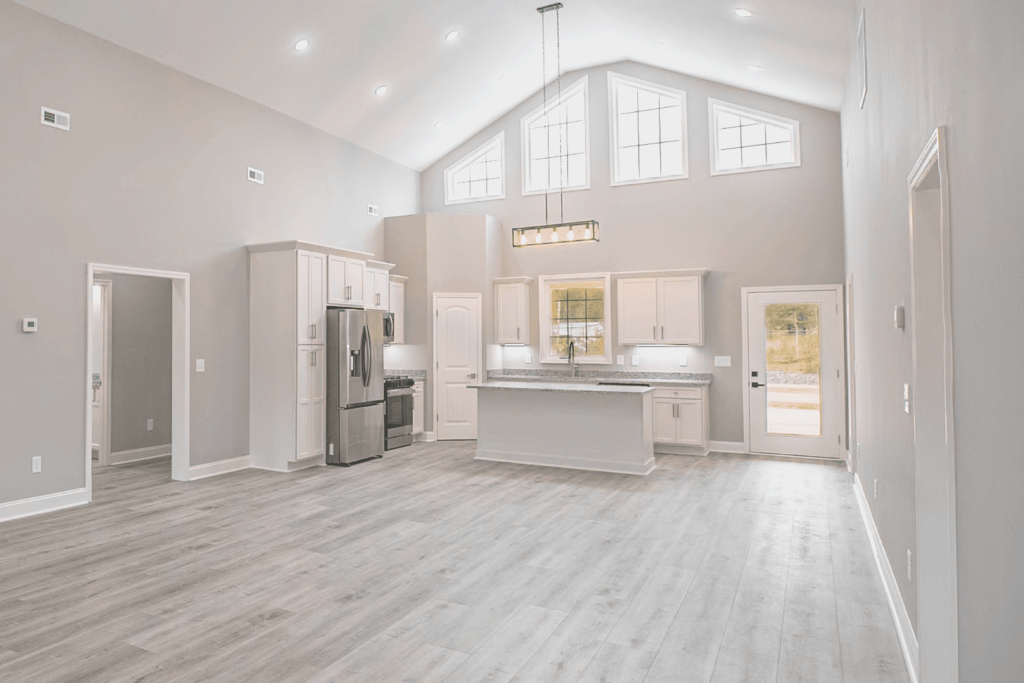
HIRE US AS YOUR GC
Don’t sweat this lifetime investment. Our turnkey home options include a dedicated project manager who will navigate the building process for you.
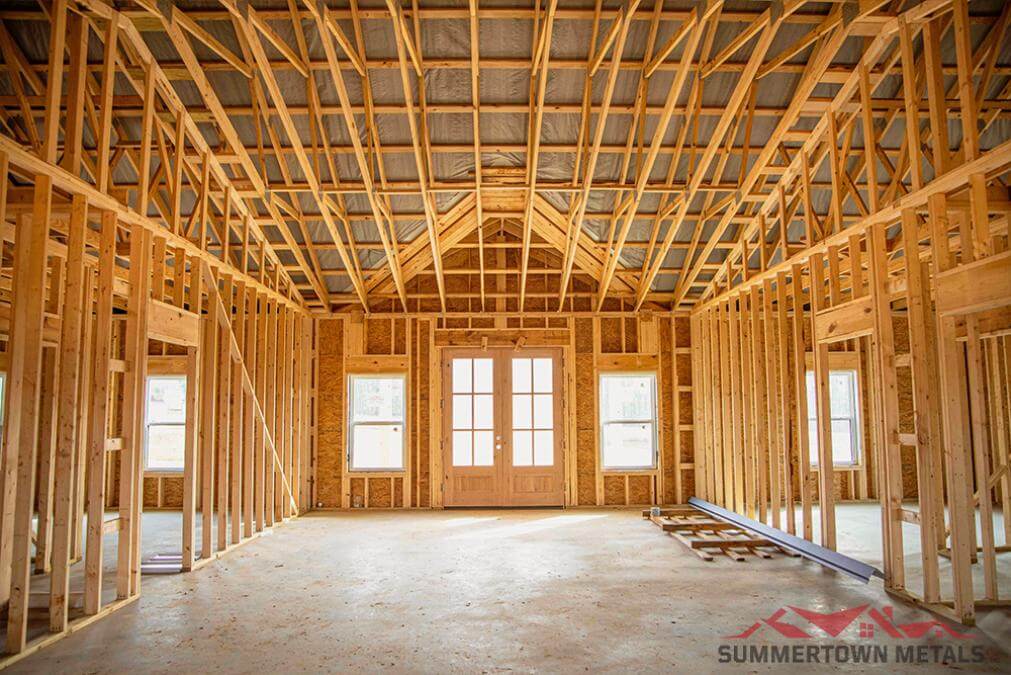
…OR BE YOUR OWN GC
Want to save some money? From industry-leading quality materials to exterior shell installation, we can set you up for success on your build.
It can be worth it if you have construction experience, a flexible schedule, and the ability to manage subcontractors, inspections, and budgets on a daily basis. Most homeowners consider it primarily to save money, but the tradeoff is increased responsibility, time commitment, and risk. For first-time builders or full-time workers, hiring a licensed general contractor is often the more practical choice.
General contractor income varies widely based on location, project size, and business volume. Many GCs earn a percentage of total project costs—typically through a management fee ranging from about 10% to 25%. On larger residential builds, experienced contractors can earn a strong annual income, especially when managing multiple projects simultaneously.
$50 per hour can be reasonable for some contractors depending on trade, experience, and location, but it’s not a universal benchmark. Skilled trades such as electrical, plumbing, and HVAC often price work per project rather than hourly. When evaluating contractor rates, it’s more accurate to compare total project bids rather than hourly labor costs.
The biggest risks include scheduling delays, cost overruns, subcontractor coordination issues, and increased personal liability for jobsite safety and construction quality. Many owner-builders also underestimate the time required to manage daily decisions, inspections, and sequencing between trades, which can lead to stress and inefficiencies throughout the project.
Learn More

Construction guides, planning tips, and building insights covering budgets, timelines, permits, materials, and every step from plan to completion...

Thinking about adding a pole barn to your property? Whether you need extra storage, a place for your animals, or a dedicated workshop, a pole barn is one of the most practical ...

This guide breaks down the process of building a house in clear, practical terms so you understand what building a home actually involves, where the major decisions happen, and what impacts...