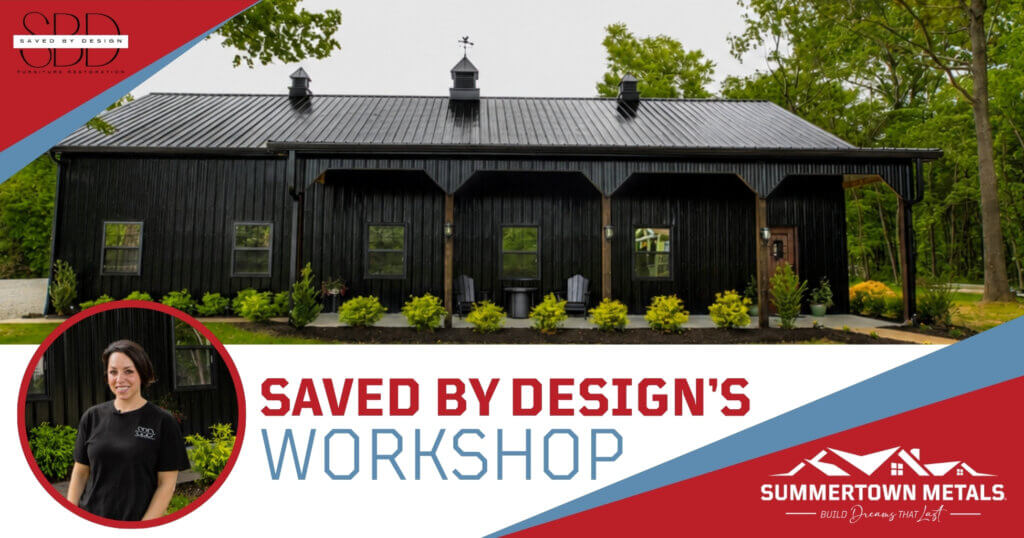
The best projects often reflect the people who use them, and this building is no exception. Designed with both purpose and personality in mind, it serves as more than just a functional space; it has become a defining feature of the property. Every decision, from the overall layout to the architectural details, contributes to a structure that feels thoughtfully integrated into its surroundings and the business Jennifer of Saved By Design built it for.
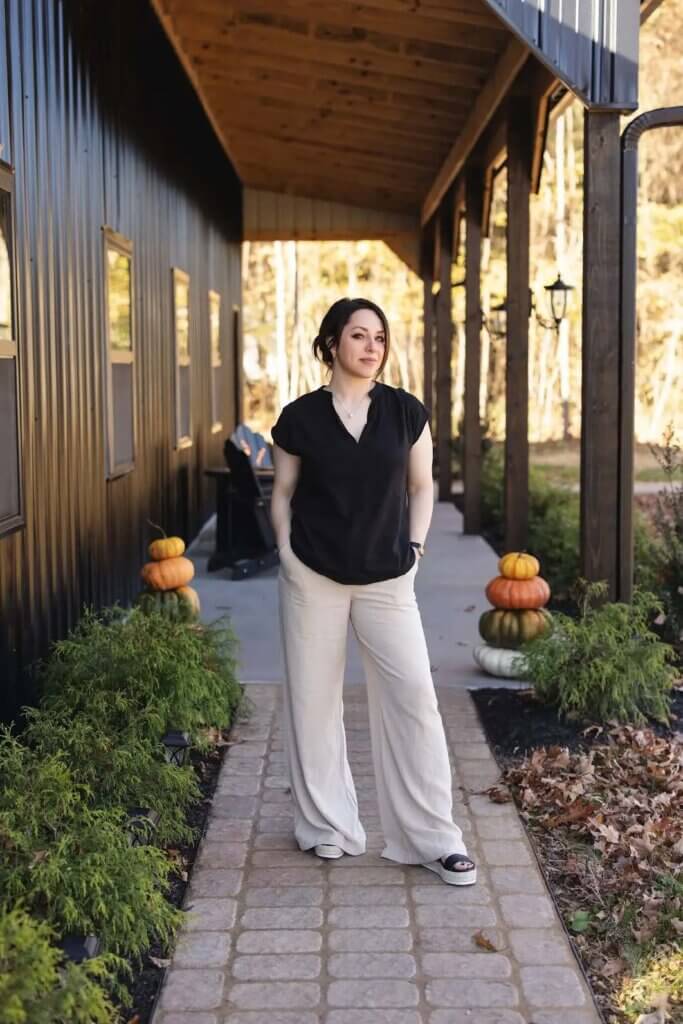
Saved by Design is a furniture restoration and creative design studio founded by Jennifer, a maker and designer who specializes in breathing new life into antique and well-loved furniture pieces. With a strong appreciation for historic craftsmanship and design eras like the early 1900s, Jennifer built the business around a hands-on approach to restoration, blending preservation, customization, and storytelling through furniture. Every piece that comes through the workshop is treated as both a functional object and a design opportunity, whether it’s being fully restored, lightly refreshed, or completely reimagined for a new space.
THE VISION BEHIND THE PROJECT
When you step into the Saved by Design workshop, you immediately get a sense that this is not a traditional production space. It’s a creative environment built intentionally around flexibility, character, and craftsmanship. Jennifer designed the space herself, ensuring it could evolve with the work rather than limit it. The workshop reflects both the business and the philosophy behind it: open, adaptable, and rooted in thoughtful design.
EXTERIOR OVERVIEW
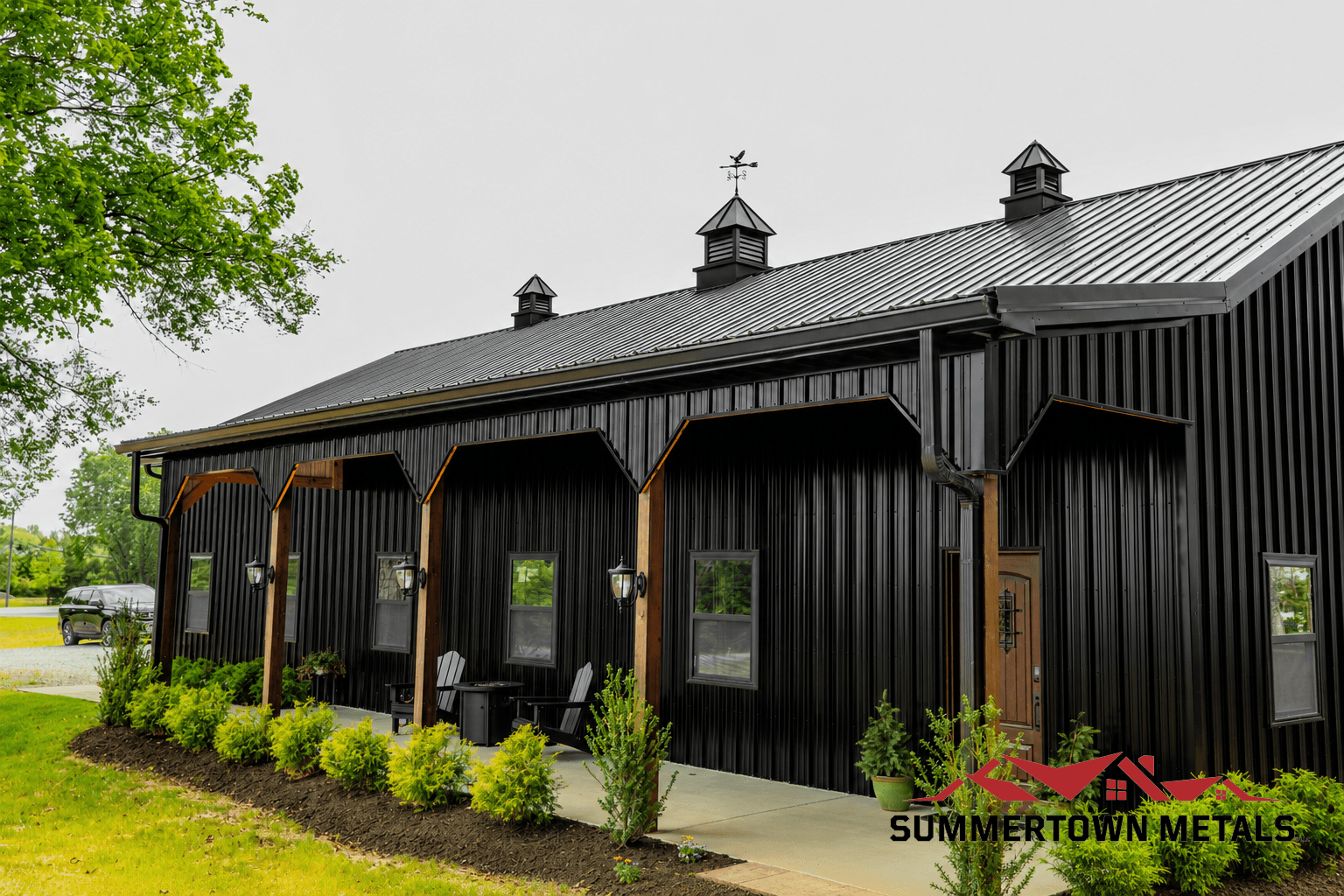
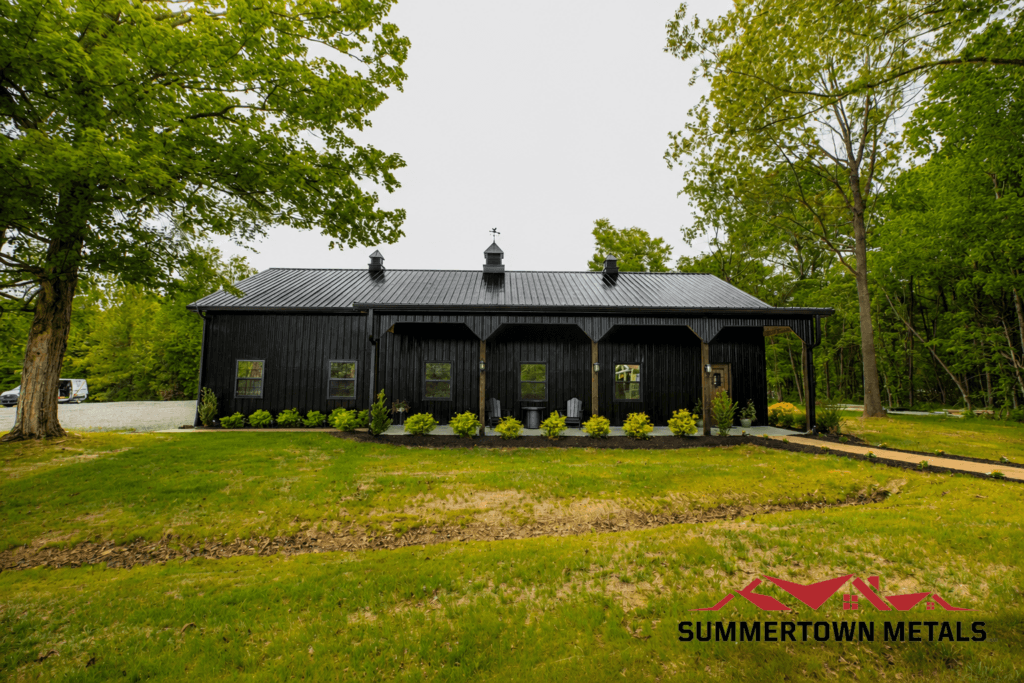
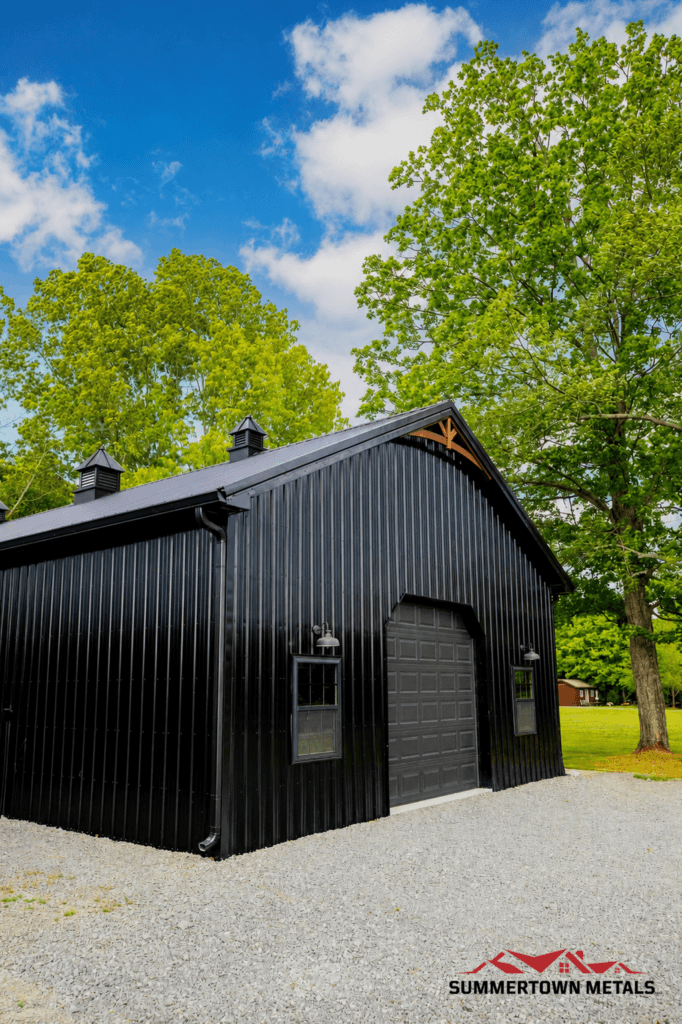
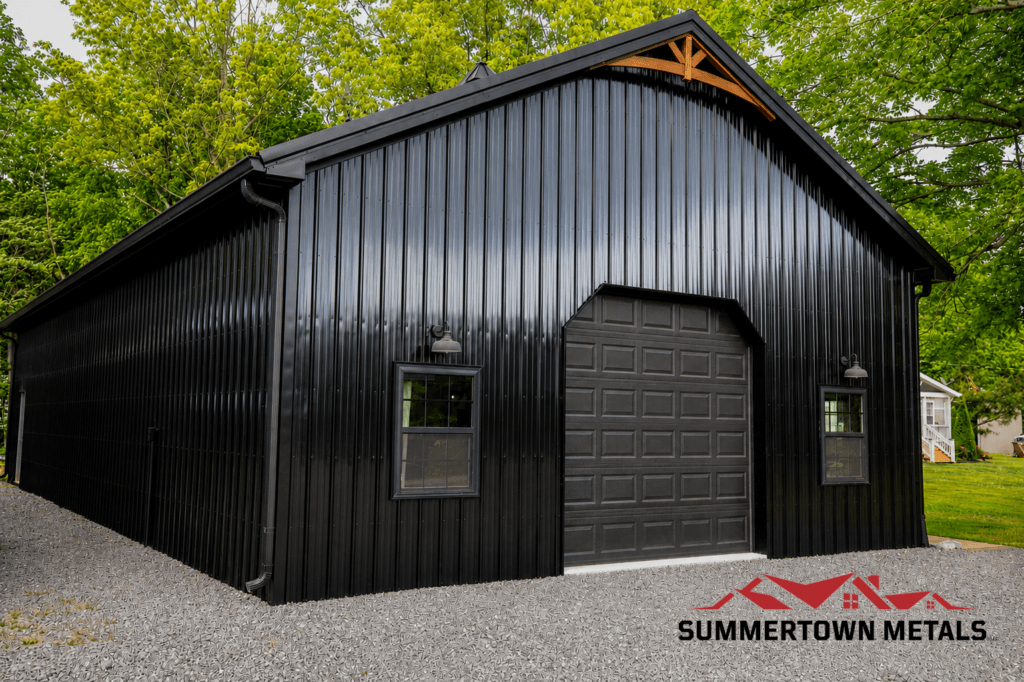
From the outside, the structure reads as more than a standard utility garage. It has a deliberate architectural presence with balanced proportions and a clean, cohesive finish. The 30’x60’x12′ enclosed garage establishes a strong primary volume that anchors the design, giving it both scale and practicality without feeling oversized for the site.
STRUCTURAL FORM & ROOFLINE CHARACTER
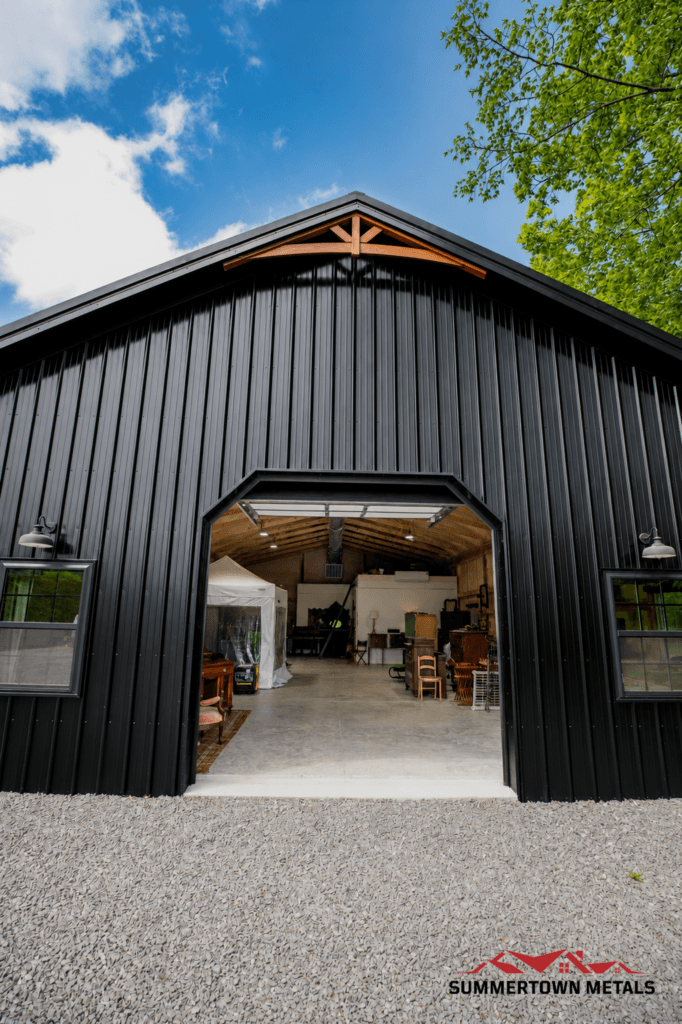
The building is framed with wood trusses, introducing warmth and visible structural character into the roof system. This detail softens the industrial nature of the metal exterior and helps the roofline feel more intentional and visually grounded.
LEAN-TO EXTENSION
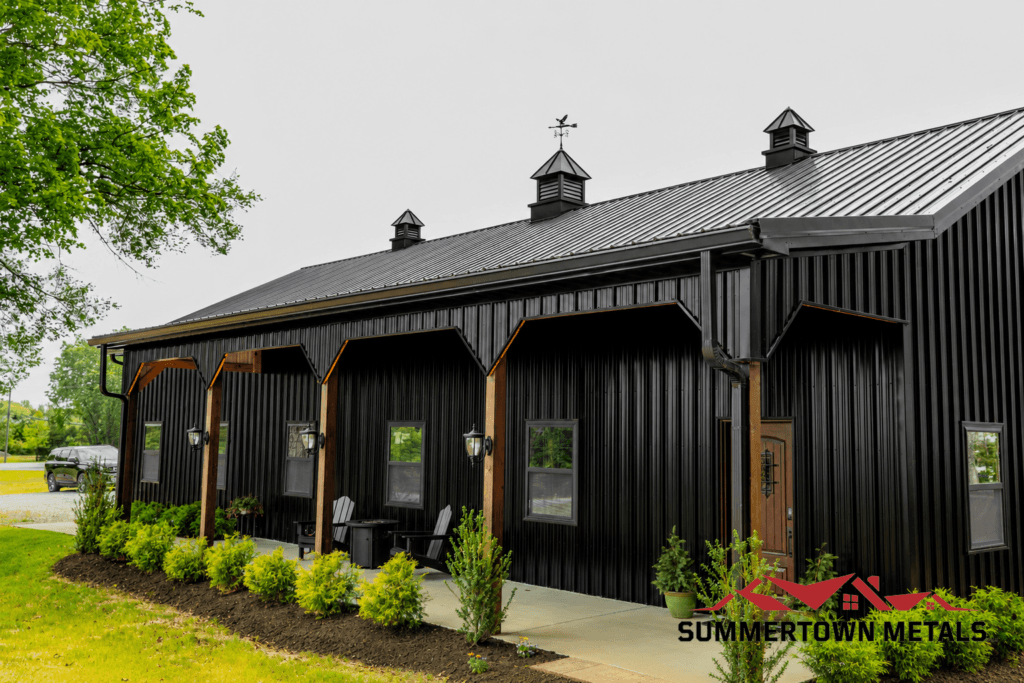
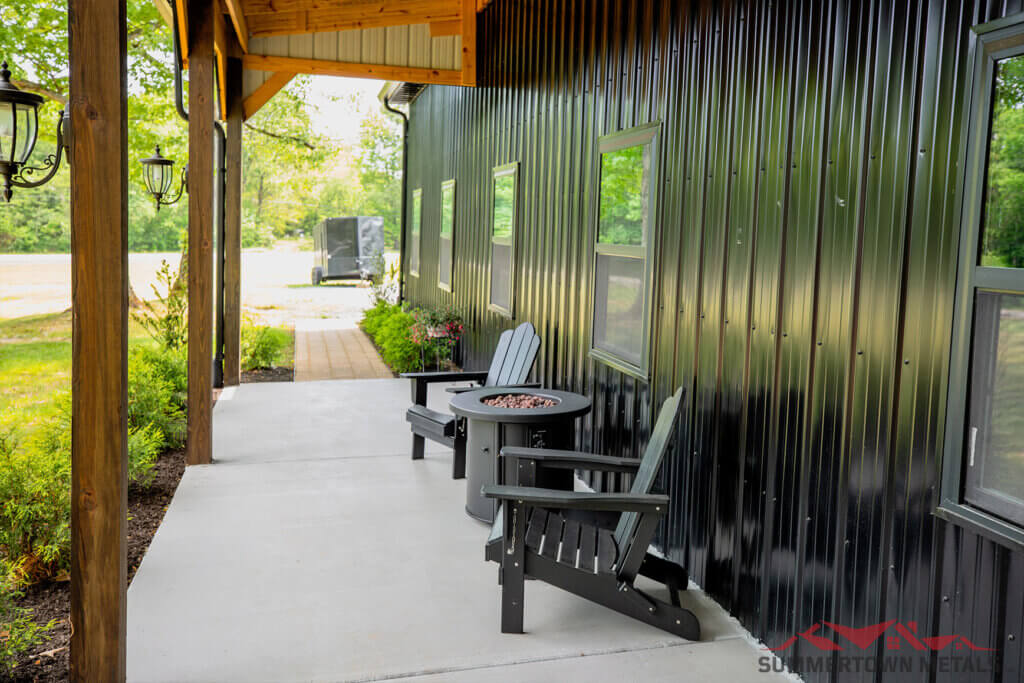
A 1–8×40 lean-to extends off the main structure, adding functional covered space while visually breaking up the mass of the building. This extension helps the overall composition feel more dynamic, reducing the box-like appearance that larger enclosed garages can sometimes have. It also serves as a recreational space for Jennifer and her team to take a break.
CUPOLAS & ROOF ACCENTS
Three cupolas, paired with an eagleweathervane, introduce vertical emphasis and traditional barn-inspired detailing. Beyond their functional ventilation purpose, they help break up the roof mass and add a recognizable silhouette from a distance.
ARCHITECTURAL POST & ARCHWAY DETAILS
One of the building’s most distinctive exterior features is the series of custom-cut metal trim accents integrated into the front overhang, framed by warm timber posts that create contrast against the dark metal exterior. Rather than using a standard straight fascia line, the trim was fabricated with a faceted, geometric profile that creates visual depth and breaks up the length of the façade. The angular design introduces a subtle architectural element that complements the building’s barn-inspired aesthetic while showcasing the versatility of custom metal detailing.
DOORS, WINDOWS, & FUNCTIONAL OPENINGS
Access and glazing were designed with a consistent black-and-white contrast theme. The building includes:
Rather than building a rigid, predefined workspace, the space was designed with adaptability in mind. The building itself started as an open-concept structure, intentionally left flexible so the layout could be developed over time based on real workflow needs.
One of the key decisions was integrating the office into the existing structure using the original building entryway. This created a natural transition point between the workspace and office area, allowing for a small landing zone that helps separate creative focus from production work.
This approach reflects a core belief behind the business: creative spaces should be allowed to grow and evolve alongside the work being done inside them.
THE OFFICE: INSPIRED BY THE 1920s
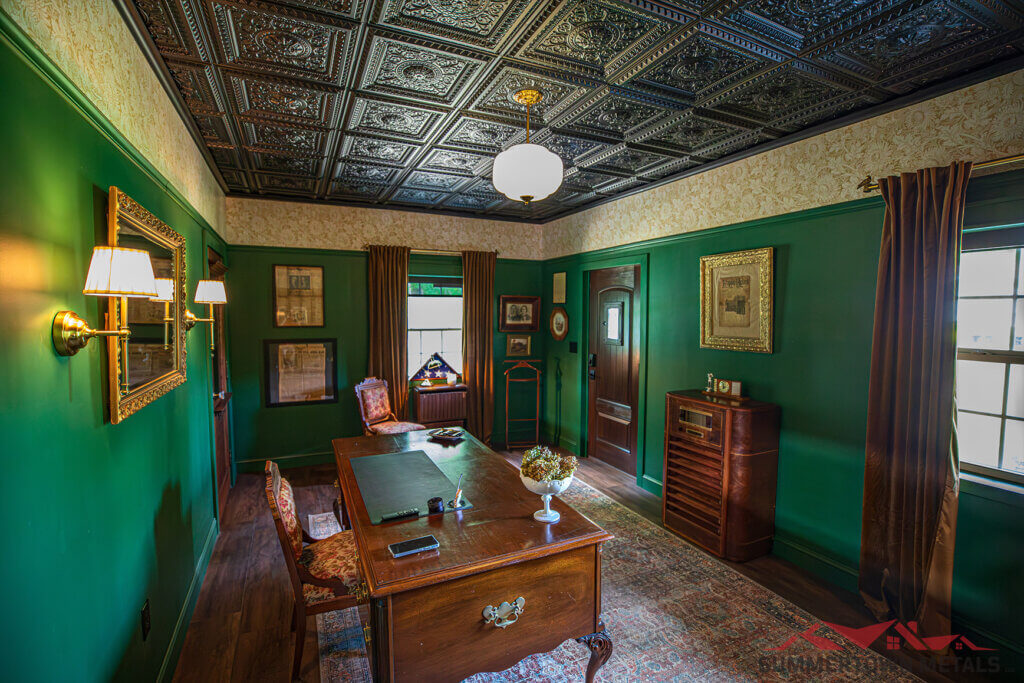
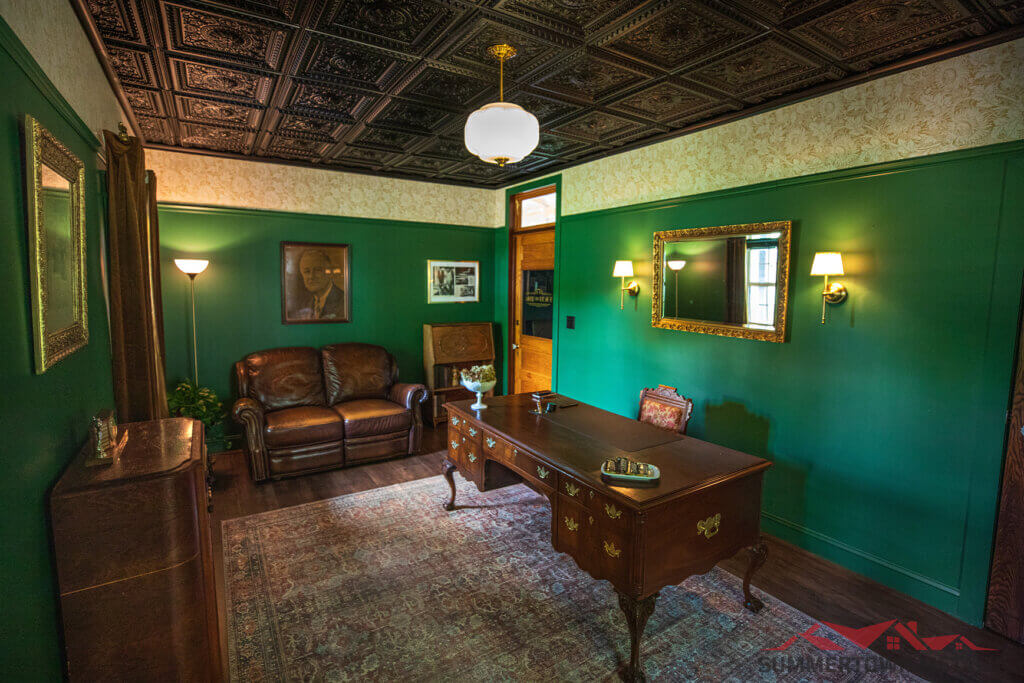
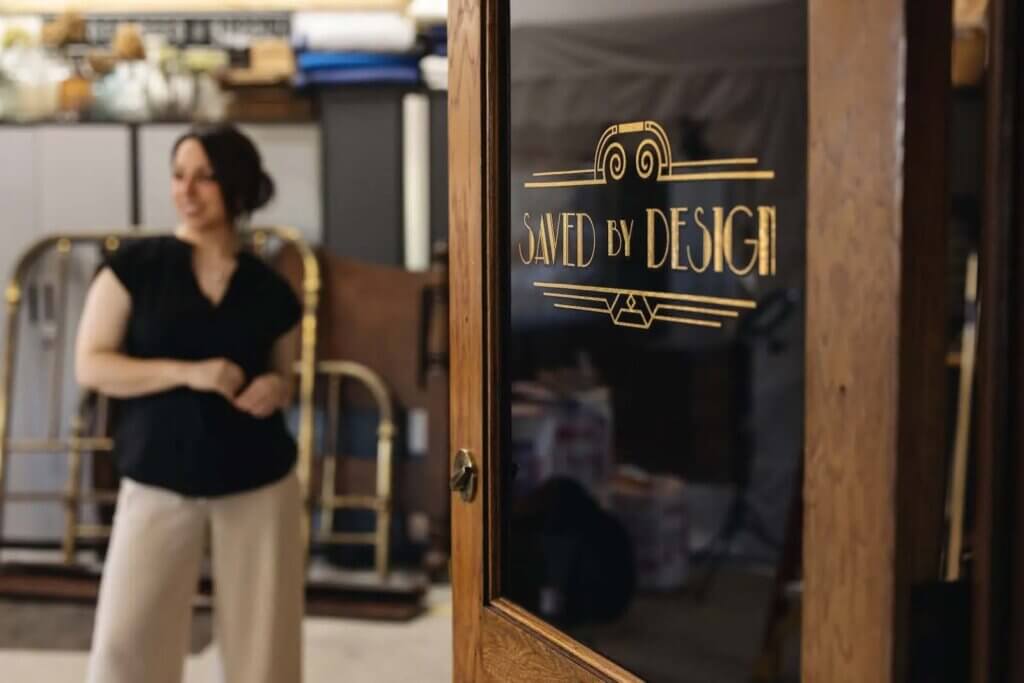
One of the most distinctive areas of the workshop is the office, which also serves as Jennifer’s favorite part of the space. Designed with a strong 1920s influence, the office embraces a dark, moody aesthetic that reflects the design era she draws inspiration from.
From the start, key elements shaped the direction of the room, even before the layout was finalized. A set of vintage-style doors became the anchor point for the entire design, setting the tone for a space that feels intentional and historic rather than manufactured.
To further reinforce the era, the ceiling was finished with decorative tiles inspired by designs popular in the late 19th and early 20th centuries, extending through the 1930s. Antique furniture pieces were incorporated throughout the office, including a salvaged desk originally sourced from a historic Wells Fargo building, adding a layer of authenticity and history to the space. A classic leather sofa completes the room, tying together the vintage aesthetic while maintaining comfort and functionality.
INSIDE THE WORKSHOP: WHERE THE RESTORATION HAPPENS
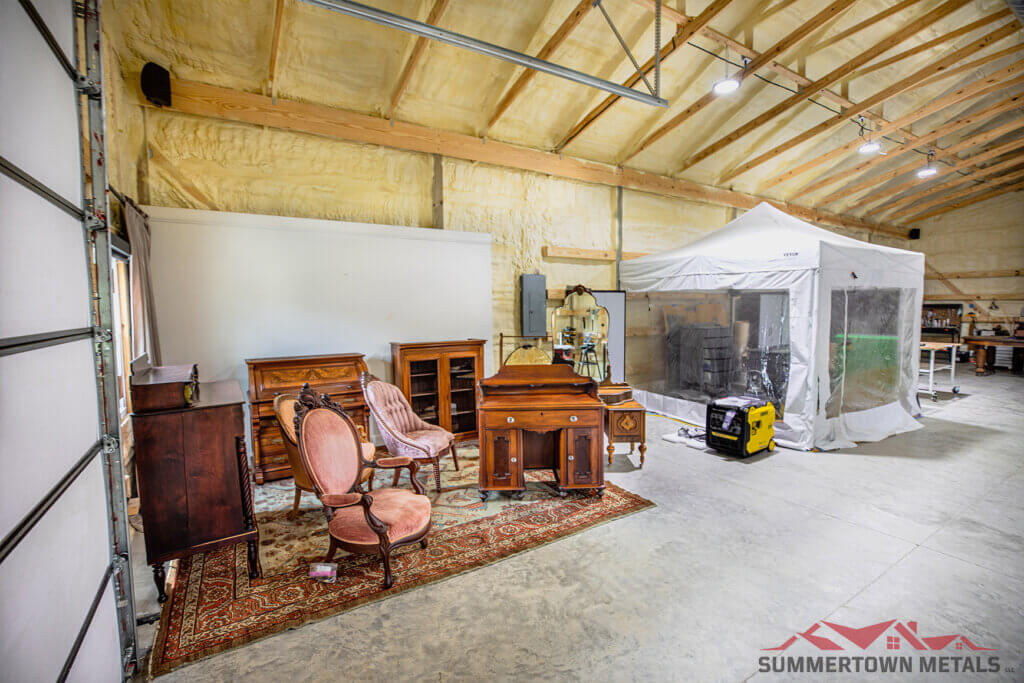
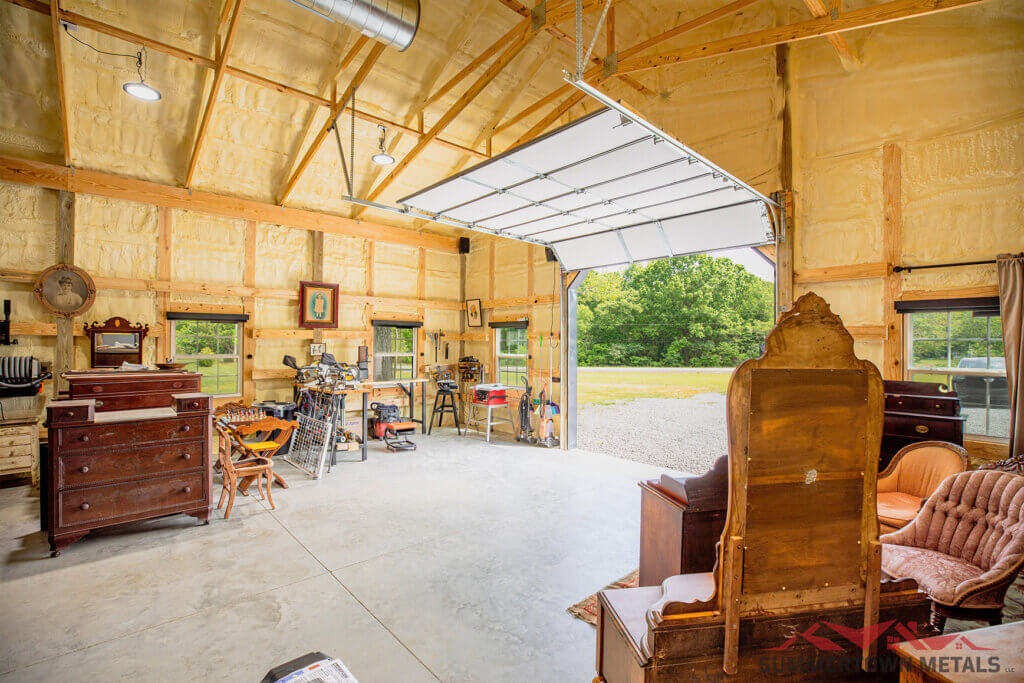
Stepping into the main workshop reveals the full range of activity behind Saved by Design. The space is constantly in motion, with furniture pieces at every stage of transformation.
Some pieces arrive needing only light cleaning and refreshing, while others require full-scale restoration or custom refinishing work. Client projects move through the space in different phases. Some just beginning their transformation, others nearing completion and ready for delivery.
The workshop is organized around this workflow, allowing for multiple types of projects to exist simultaneously without losing structure or efficiency.
One of the key decisions was integrating the office into the existing structure using the original building entryway. This created a natural transition point between the workspace and office area, allowing for a small landing zone that helps separate creative focus from production work.
This approach reflects a core belief behind the business: creative spaces should be allowed to grow and evolve alongside the work being done inside them.
RESTORATION, REFINISHING & CUSTOM WORK
Within the space, different zones support different stages of the creative process. One area is dedicated to heavier restoration and preparation work where materials are stripped, repaired, and rebuilt as needed. This is the part of the shop where things get more rugged and hands-on, intentionally positioned near access points for easier cleanup and flow.
Other areas are focused on refinement and staging, where completed or nearly completed pieces are prepared for presentation. This is where craftsmanship meets presentation ensuring each piece is shown in its best light before returning to a client or being featured for sale.
One of the most important parts of the workshop is the staging area, where finished furniture is photographed and presented. This space was designed with lighting and accessibility in mind, taking advantage of a large garage-style door that can be opened to bring in natural light.
Rather than relying on external locations, Jennifer created an in-house staging setup using a simple but intentional backdrop anchored to the structure of the building itself. This allows each piece to be photographed consistently while still feeling warm, natural, and true to its character.
It’s here that restored furniture is given its final presentation before rehomed.
From the beginning, Saved by Design was never meant to look like a traditional workshop. Jennifer intentionally avoided a cookie-cutter setup in favor of something more personal, functional, and adaptable. The result is a space that reflects both creativity and practicality, where design inspiration, restoration work, and client projects all coexist.
It’s a workshop built not just for production, but for imagination.
IMPORTANT NOTE
Summertown Metals completed the post-frame exterior structure and primary framing package, including the building shell, structural system, and exterior components. All interior finish work, build-out, and final interior customization were completed by others, allowing the exterior to serve as a durable, flexible foundation for a fully customized interior space.